
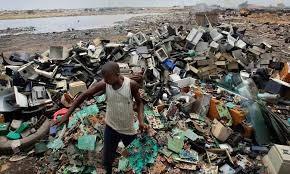
Despite the Hazards, Ghana’s Illicit Waste Trade is Booming
Source: https://issafrica.org/iss-today/despite-the-hazards-ghanas-illicit-wast…
Source: https://issafrica.org/iss-today/despite-the-hazards-ghanas-illicit-wast…
Each year, an estimated 150,000 tonnes of electronic waste are shipped to Ghana, both legally and illegally. Much of it arrives labelled as “second-hand goods” or “recyclables”, but in reality large volumes are beyond repair and end up in informal dumps and burning sites.
ISS Africa
At sites such as Agbogbloshie in Accra, workers – often young men and children – dismantle discarded computers, televisions and cables to recover copper and other metals. To separate metals from plastic sheathing, cables are frequently burned in the open. This releases highly toxic chemicals, including dioxins and brominated flame retardants, into the air, soil and water. Communities living nearby are directly exposed, with long-term risks to respiratory health, neurological development and livelihoods.
Illicit waste trafficking is now recognised as a lucrative branch of organised crime, generating billions of dollars globally each year. In Ghana, the trade involves a mix of local and foreign companies, brokers and corrupt officials who exploit loopholes in customs and waste legislation.
The Basel Convention regulates transboundary movements of hazardous waste and requires that shipments be managed in an environmentally sound manner. The Bamako Convention goes further by banning imports of hazardous waste into Africa from non-Parties. However, enforcement remains a challenge when consignments are misdeclared as second-hand equipment or donations.
For Parties to the Bamako Convention, Ghana’s experience illustrates the need to:
Strengthen inspection and tracking of used EEE and e-waste shipments;
Close legal loopholes around “second-hand” and “personal use”;
Invest in safe, formal recycling systems and alternative livelihoods for affected communities; and
Enhance cooperation between environmental, customs and justice authorities to address organised waste crime.