
This article falls within the framework of the JHR scholarship for the fight against hazardous waste.
It evaluates Senegal's legal and institutional framework (Bamako Convention, 2020 law on the ban
of plastic importation and use in Senegal).
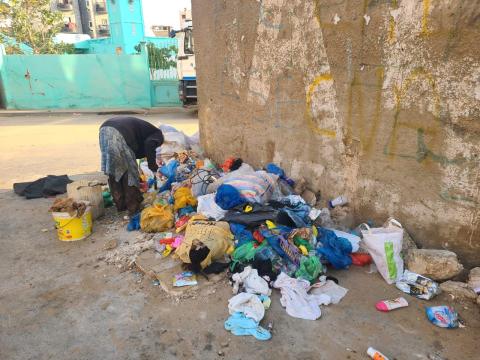
In Dakar, the capital of Senegal, people continue to use plastic packaging daily. Despite the
existence of a law regulating its use, plastic waste is increasingly polluting the environment and
degrading the quality of life.
The proliferation of plastic materials in the Senegalese capital is causing poor living conditions,
environmental problems, and public health issues. Animals and people can also suffer serious
consequences from the use of plastic waste. These dangers include: visual pollution of the soil,
clogged gutters and sewers, cardiovascular and respiratory diseases, eye irritation, cancer, and
more.
To combat the harmful effects of plastic use, the State of Senegal passed a law in 2015
prohibiting the production, import, possession, distribution, and use of thin plastic bags and
promoting the rational management of plastic waste.
Law No. 2015-09 of May 4, 2015, prohibits throughout the national territory the production,
import, use, possession for sale, and sale or free distribution of plastic bags less than 30 microns
thick. It also stipulates penalties ranging from a fine of 10,000,000 to 20,000,000 CFA francs and
imprisonment of three (3) to six (6) months, or one of these two penalties alone, for
manufacturers, and a fine of 20,000 to 50,000 CFA francs for the use, possession for sale,
offering for sale, sale, or free distribution of plastic bags less than 30 microns thick. Furthermore,
users who abandon or discard plastic waste in locations other than designated collection or
recycling points must pay a fine of 10,000 to 30,000 CFA francs.
The first law only applies to plastic bags with a thickness of less than 30 microns. Its
implementation was ineffective and did not produce the desired results. To address this
challenge, Senegal passed a new law on January 8, 2020 (Law No. 2020-04). This new law
prohibits the production, importation, possession for sale, offering for sale, sale, making
available to the user, and use, in any form whatsoever, of single-use plastic products or
disposable plastic products. These products include those made or manufactured from plastic
materials. They include cups, glasses, and glass lids; cutlery and plates; straws and drink stirrers;
and sachets intended for and used to package water or any other beverage, alcoholic or non-
alcoholic, for the purpose of placing it on the market.
Senegal is among the first African countries to ratify the Bamako Convention on the Ban on the
Import of Hazardous Wastes into Africa. He established a legal and institutional framework for
the implementation of the convention. Adopted on January 30, 1991, in Bamako, it also covers
the control of transboundary movements and the management of hazardous waste produced in
Africa, including plastics. “The country has strengthened import controls, coordination between
environmental services and customs, and participates in the regional information exchange
mechanisms provided for by the Convention. These actions contribute to the prevention of illegal
waste trafficking and to better monitoring of hazardous waste flows,” noted Alex Mangwiro,
Regional Coordinator for Chemicals, Waste and Air Quality, United Nations Environment
Programme (UNEP).
The reality on the ground…
It is 10:37 a.m. at the bus stop for line 42 of the Urban Transport Financing Association (AFTU)
located in Wakhinane (a neighborhood of Guédiawaye). Under a food tent, a group of men and
women have gathered in front of the buses to eat breakfast. Dressed in dark and light green
uniforms, the employees of the National Integrated Waste Management Company of Senegal
(SONAGED) are on break after cleaning the area around the bus stop. Samba Diouf is the
supervisor for the Guédiawaye delegation. He is responsible for coordinating the daily household
waste cleanup activities. “We have noticed that there is more plastic waste in the streets of the
Dakar suburbs. Despite the legal measures put in place by the Senegalese authorities regulating
the use of plastics, people still use these products as packaging and then discard them
everywhere after use.” These plastics are among the elements that most pollute the capital,"
argued Mr. Diouf.
Saly Barry, around forty years old, sells fish in Hamo 4, a neighborhood in Guédiawaye, on the
street. In front of her is a bag displaying several types of fresh fish. To her right, she carefully
holds packs of plastic bags of various sizes for packaging the fish for her customers. “My
customers come empty-handed to buy fish. As a vendor, I have to offer them plastic bags to keep
the product fresh. I always have several packs of bags on hand, which I give away to my
customers to keep them coming back. Otherwise, they'll go elsewhere. Buying these bags is a
huge loss for me… but what can I do?” she explained. A fishmonger for over 15 years, Saly
maintained that the plastic bags that people throw away after use contribute to the degradation of
the environment and increase pollution.
Konseyiga Sarata Prisca Charifatou, a final-year undergraduate student in Land Use Planning
and Sustainable Development in Ouagadougou, is involved in several initiatives for
environmental protection and youth participation in public policy development through
associations such as CONAJEC and Agir pour le Climat (Act for the Climate). She argues that
the widespread use of plastics is due to their accessibility and various everyday applications.
"Plastics are widely used because they are practical, lightweight, durable, inexpensive, and
readily available. Their use has become essential in people's daily lives, particularly for
packaging, food storage, and transporting goods," she explained.
However, the excessive use of plastic can lead to significant pollution in countries that lack
adequate infrastructure for sorting and recycling, such as Burkina Faso and Senegal, even though
the legal framework regulating its use is well-developed. "Plastic waste clogs gutters, pollutes
soils and rivers, and threatens biodiversity. It takes hundreds of years to decompose and release
toxic substances harmful to the environment and human health," she reminded.
In Hann Bay, plastic pollution is 360,000 times higher than the standard.
Of the seven types of plastic found in Senegal, polyethylene, used in bags distributed in markets
and shops, is the most widely used by the population. After use, most of this plastic waste ends
up on Dakar's beaches, causing enormous damage to residents and the aquatic environment. "It's
a constant threat to agriculture, livestock farming, and fishing. In the marine environment, all the
PET bottles used for storing water and drinks end up in the sea. The bottles, caps, and packaging
labels break down into microplastics, which then disintegrate into nanoplastics invisible to the
naked eye and enter the food chain through fishing," explained Mbacké Seck, an ecologist.
To alert the authorities, the Hann Bay network commissioned analyses of microplastic samples.
The results are alarming. “We analyzed microplastic samples taken from three different locations
in Hann Bay. The results revealed that the pollution level in Hann Bay is 306,000 times higher
than the standard,” said its coordinator.
The Hann Bay Network organizes clean-up campaigns on some beaches in the Dakar region to
improve the living conditions of local residents. “Each of our monthly operations, covering five
kilometers of beach, allows us to remove 20 to 30 tons of plastic, which is then sent to the
Mbeubeuss landfill,” stated Mr. Seck.
The coordinator of the Hann Bay Network is calling on the Senegalese government to take
drastic measures to combat plastic pollution, following the example of East African countries
that have successfully eliminated it. Mr. Seck also advocates for the implementation of an
incentive-based policy aimed at finding alternatives to plastics.
Population Growth Under Scrutiny
Senegal has experienced strong population growth over the past four decades. Between 1976 and
2023, the total population increased from 4,997,885 to 18,126,390 inhabitants in 2023, according
to the 2023 General Population and Housing Census of Senegal. In rural areas, the resident
population is estimated at 9,922,399 inhabitants, representing 54.7% of the total population. The
urbanization rate continues to rise. It increased from 34% in 1975 to 54.7% in 2023. Population
density reached 92 inhabitants per square kilometer in 2023, an increase of 67 inhabitants
between 1976 and 2023.
According to the program officer for the Bamako Convention, the increase in plastic use in
Senegal is due to population growth, rapid urbanization, high demand for low-cost products, and
the availability of single-use plastics. “Despite the existence of laws and international
commitments, their implementation remains a challenge due to limited enforcement capacity, a
lack of affordable alternatives, and the significant role of the informal sector. This demonstrates
that legal frameworks must be accompanied by awareness campaigns, sustainable alternatives,
and effective waste management systems,” he emphasized.
Municipalities Take Initiatives
Abdou Seye is the deputy mayor of Yeumbeul Nord, one of the six municipalities in the Keur
Massar department of the Dakar region. To support the Senegalese government in the fight
against the harmful effects of plastic, his municipality has developed a project that will be
implemented in Yeumbeul in the coming months.
To achieve the objective of the environmental commission he heads, he plans to build upon a
municipal project in Diameguène Sicap Mbao, a municipality in the Pikine department, to
combat the proliferation of plastic waste in their community. Their goal is to offer a system for
collecting and recycling plastic waste and to promote the circular economy. However,
implementing this initiative is currently proving difficult, as they are struggling to find technical
and financial partners and to secure support from public institutions. “For over three years, we
have been leading a reforestation project along public roads, schools, and the Atlantic coast to
combat climate change and rising sea levels. In this project, we partnered with an institutional
organization supported by a Spanish international organization. We achieved significant results
with this project. With our second initiative, we are struggling to find partners for its
implementation,” explained Mr. Seye.
The chairman of the Environment Committee urges Senegalese authorities to establish a system
for collecting and processing plastic waste to reduce its impact on the environment, health, and
quality of life.
Citizen participation: a solution
Konseyiga Charifatou calls on public authorities committed to combating the proliferation of
plastic waste to continue and strengthen their existing efforts to protect the environment. “The
ban on the import and export of plastic bags is a welcome decision that must be accompanied by
concrete and sustainable actions,” she declared.
The solutions she proposes include promoting the active use of eco-friendly and biodegradable
packaging, supporting local initiatives to produce alternatives to plastic bags, and raising public
awareness about the consequences of plastic waste. She also proposes the implementation of an
effective system for waste management, sorting, and recycling, and citizen participation,
particularly among young people, in environmental protection efforts. Because, according to her,
“protecting the environment means guaranteeing a healthy future for generations to come.”
Oumar Ba (barouba90@gmail.com)